What you need to know Now about getting an accessory dwelling unit permit:
- Fairfax County calls this an Accessory Living Unit, and your permit path depends on whether the unit sits inside the home or stands alone.
- A new state law caps ADU permit fees at $500, fully effective July 1, 2027.
- Interior units generally use a faster administrative permit; detached units need a special permit and a two-acre lot.
- Missing paperwork, not construction problems, causes most permit delays.
Keep reading for the permit type, documents, and timeline for your project.
What Is an Accessory Dwelling Unit Permit?
An ADU permit is the local approval needed to build or convert a secondary living space on your lot, confirming it meets zoning, safety, and occupancy rules.
Not sure an ADU fits your lot? Our guide to ADUs in Virginia covers zoning eligibility and value first.
What Type of ADU Permit Do You Need?
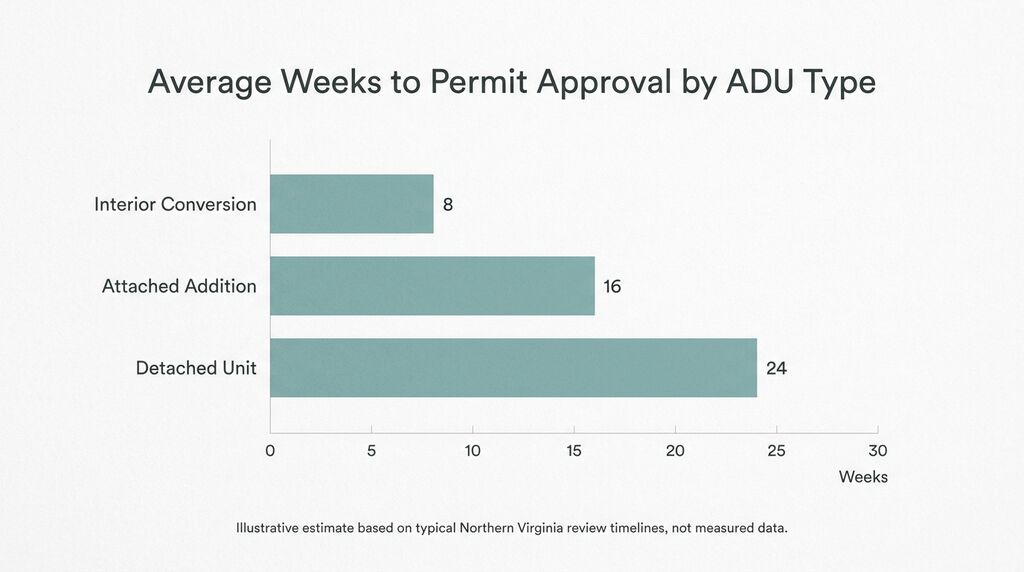
The permit path depends on where the unit sits. Interior conversions usually get faster administrative review; detached units need a special permit and a hearing.
Administrative Permit vs. Special Permit
| Factor | Interior Unit | Detached Unit |
| Permit type | Administrative permit | Special permit |
| Approval body | Zoning Administrator | Board of Zoning Appeals |
| Minimum lot size | None specified | Typically 2+ acres |
| Public hearing required | No | Yes |
| Typical review time | 4 to 8 weeks | 3 to 6+ months |
Fairfax County requires either unit be owner-occupied under either permit type, and the approved permit must be recorded in county land records.
What Documents Does the Application Require?
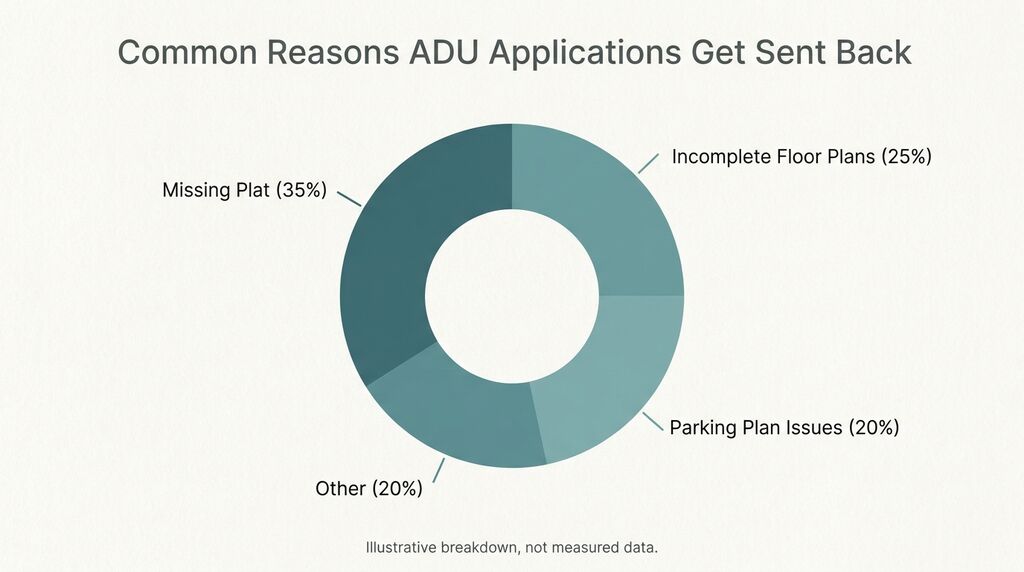
Every application needs proof the unit meets zoning limits before a reviewer checks construction details. Gather these before you submit.
- A certified plat showing every structure on the lot, including the unit’s footprint
- Floor plans labeling kitchen facilities and independent egress points
- Proof of owner-occupancy for the primary home or accessory unit
- Parking plan showing the required additional off-street space
- Structural and electrical plans for the trade permits that follow
What Are the Steps in the Application Process?
The process runs in a predictable sequence. Detached units add a public hearing that interior units skip.
- Confirm zoning and lot eligibility before drawing plans
- Submit plans, plat, and fees through the county’s online portal
- Complete zoning, then structural and trade plan review
- Attend a public hearing for detached units
- Receive approval and record it in county land records
- Complete construction and pass required inspections
- Obtain final occupancy approval before move-in
Need to figure out financing first? Our ADU financing guide breaks down loan options by project type.
How Much Does an ADU Permit Cost, and How Long Does It Take?
Permit costs are changing. Virginia’s new ADU law caps fees at $500 once it takes full effect statewide on July 1, 2027, and some counties are adjusting fees early.
Estimated Timeline by ADU Type
| ADU Type | Design & Permitting | Construction | Total Project Time |
| Interior conversion | 4 to 8 weeks | 2 to 4 months | 3 to 6 months |
| Attached addition | 8 to 12 weeks | 4 to 6 months | 6 to 9 months |
| Detached new-build | 3 to 6+ months | 4 to 8 months | 9 to 18 months |
Curious what’s possible for your property? Our ADU remodeling services page outlines project types across Northern Virginia.
What Should You Look for in a Contractor for This Process?
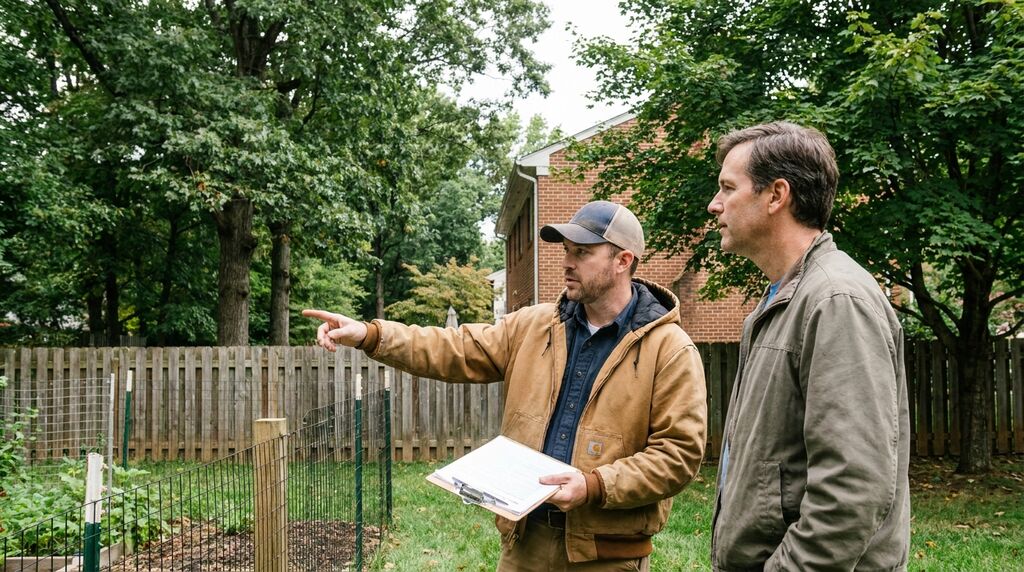
A contractor who’s pulled ADU permits before knows which documents get rejected most, saving months of delay. Ask for recent permits secured, not just completed builds.
Wondering if we build near you? Check our service areas to confirm coverage.
How Do You Get Ready to Apply?

Four steps determine whether your application moves through cleanly or bounces back for corrections.
Step 1: Confirm Zoning Eligibility
Check your lot against current zoning rules before drawing plans. This step determines your permit type and document list.
Step 2: Get a Certified Plat
Order a certified plat showing every structure on your lot, including the unit’s footprint, since reviewers check this first.
Step 3: Confirm Your Parking Plan
Verify your lot can provide the required off-street space before you submit, since a missing space is a common rejection reason.
Step 4: Hire a Contractor Who Can Submit a Complete Package
Choose a contractor who assembles plans, plat, and fees into one submission, avoiding multiple rounds of corrections.
Frequently Asked Questions about ADU Permits
How Long Does an ADU Permit Take to Get Approved?
Interior units typically clear administrative review in four to eight weeks. Detached units needing a special permit and hearing often take three to six months or longer.
Can I Rent Out My ADU Once It’s Permitted?
Virginia’s new statewide law drops the requirement that occupants be related to the homeowner, though some localities still restrict short-term rentals. Confirm current rules for your locality first.
Do I Need a Permit for a Small Backyard Cottage?
Yes. Size doesn’t exempt a structure from permitting. Any detached living space needs a special permit and, in most Northern Virginia jurisdictions, a minimum lot size.
What Happens If I Build an ADU Without a Permit?
An unpermitted unit can’t legally be occupied, may lack insurance coverage, and typically must be brought into compliance or removed if discovered, often at your expense.
Does an ADU Permit Expire?
Many administrative permits carry an initial term with renewal tied to continued compliance. Confirm your permit’s renewal schedule so it doesn’t lapse unnoticed.
Getting the Paperwork Right the First Time
Most ADU projects stall from an incomplete application, not a construction problem. Preparation, the right documents, permit type, and a realistic timeline, is what gets you approved.
Renewal Homes has guided homeowners across Fairfax, Arlington, and Falls Church through both interior and detached ADU permits.
Ready to start your ADU permit application? Contact Renewal Homes for help assembling your complete package.