What you need to know now about this ADU financing guide:
- Most Northern Virginia homeowners pay for an ADU with a HELOC, a cash-out refinance, or a renovation loan tied to the home’s after-completion value, not a savings account.
- Fannie Mae’s December 2025 guideline update now lets single-unit properties carry up to three ADUs and count ADU rental income toward loan qualification, a change most financing guides still haven’t caught up with.
- Virginia has no dedicated state ADU loan program like California or Massachusetts, so your financing path runs through a private lender, not a state agency.
- Lenders weigh your equity, your credit score, and increasingly your ADU’s projected rent, and each financing option handles that third factor differently.
Stick with us for the next few minutes and you’ll know exactly which financing option fits your equity position, your credit profile, and your timeline.
What Is ADU Financing and Why Is It Different Here?
ADU financing is any loan or credit line used to design, permit, and build a secondary living unit on a lot that already has a primary home. In Northern Virginia, it almost always means borrowing against the equity you’ve already built, because there’s no local grant program footing part of the bill.
That last part surprises people. Homeowners searching for ADU financing usually stumble onto California ADU grants or Massachusetts’s state-backed loan program first. Neither applies here.
We’ve sat across the table from Fairfax County homeowners who assumed there was a Virginia equivalent. There isn’t one yet. Your ADU gets built with a HELOC, a cash-out refinance, a renovation loan, or a combination of the three.
Already looked into zoning and wondering if your lot even qualifies? Our complete guide to ADUs in Virginia covers the zoning and permitting side in depth.
Eighteen states had passed laws broadly allowing ADU construction as of last year, according to NAHB, with most of that activity landing in the past four years. Financing rules are still catching up to zoning law almost everywhere, Virginia included.
What Are My Main Options for Financing an ADU?
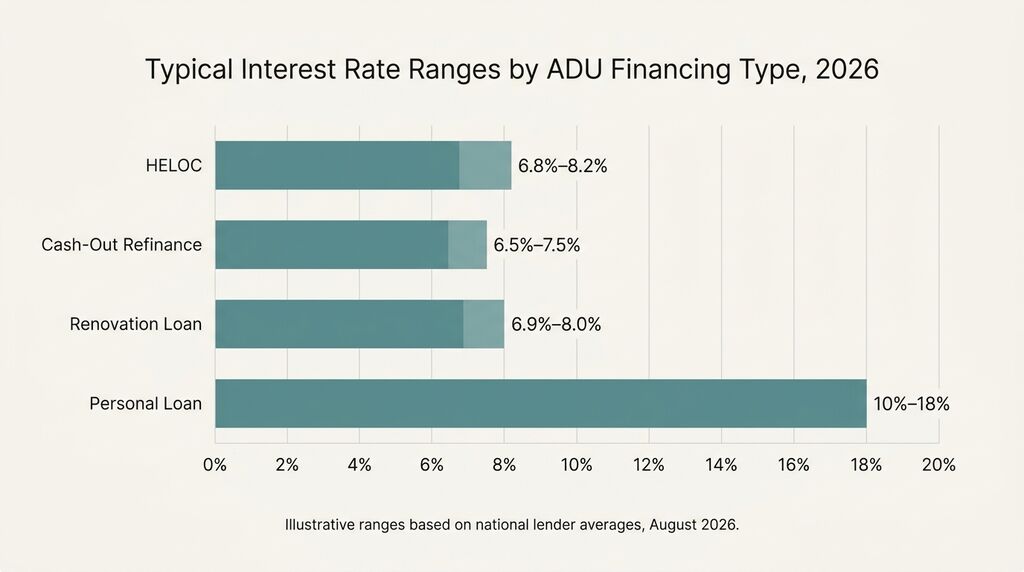
Four paths cover almost every ADU project we’ve financed with clients across Fairfax, Arlington, and Alexandria. Each one trades speed, cost, and flexibility differently, and the right pick depends on how much equity you’re sitting on right now.
Home Equity Line of Credit (HELOC)
A HELOC lets you borrow against your current equity, up to a set limit, and draw funds as construction bills come in. You pay interest only on what you’ve drawn.
The national average HELOC rate sits at 7.44 percent as of early August 2026, according to Bankrate. That’s meaningfully cheaper than a personal loan and gives you flexibility a lump-sum loan doesn’t.
The tradeoff: your credit line is capped by your current home value, not what the finished ADU will be worth. If you’re light on equity, a HELOC alone might not cover a full detached build.
Cash-Out Refinance
A cash-out refinance replaces your existing mortgage with a larger one and hands you the difference in cash. It resets your loan term, so you’re starting your mortgage clock over.
This works best if current mortgage rates are close to what you’re already paying. If you locked in a rate well below today’s market, refinancing away from it to fund an ADU usually costs more than it saves.
Renovation and Construction-to-Permanent Loans
These loans qualify you based on your home’s after-completion value instead of its current value, which matters if your equity is thin but your finished ADU will add real value. Funds release in stages as construction milestones are hit.
Fannie Mae’s HomeStyle Renovation program and FHA’s 203(k) program both fall in this category, and both now treat ADU construction more favorably than they did two years ago.
A Construction-to-Permanent loan works differently. It funds the build directly, then converts into a standard mortgage once the ADU passes final inspection, so you avoid the extra closing costs of two separate loans.
Personal or Unsecured Loans
A personal loan skips using your home as collateral entirely, which is appealing if you’d rather not touch your mortgage. The cost is a shorter repayment window and a rate that runs well above secured options.
We generally see this used to cover a gap, say, the last $20,000 to $30,000 of a project, rather than the full construction cost. It’s rarely the right tool to finance an entire ADU on its own.
Weighing a garage conversion against a detached build? Our ADU remodeling page breaks down what each configuration typically involves before you lock in a loan amount.
How Did Fannie Mae’s 2025 Updates Change What You Can Borrow?
Fannie Mae expanded ADU eligibility in two separate updates, and most financing articles online still describe the old rules. Under SEL-2025-10, issued in December 2025, single-unit properties can carry up to three ADUs, up from a de facto limit of one, provided local zoning allows it. That expansion takes effect for lenders using UAD 3.6 appraisals, which most lenders are expected to adopt by March 31, 2026.
The same update lets two- to three-unit properties include an ADU, a configuration that was previously ineligible for conventional financing altogether. That widens the pool of Northern Virginia properties, including older duplexes near Falls Church and Alexandria, that now qualify.
A separate update, SEL-2025-08 from October 2025, confirmed that ADU rental income can factor into a borrower’s qualifying income under Fannie Mae HomeReady loans. That’s a meaningful shift for anyone building an ADU partly to offset the loan payment with future rent.
There is a ceiling on that number. Lenders apply a standard 25 percent vacancy and expense deduction to the ADU’s gross rent first, then count up to 30 percent of your total qualifying income from what’s left. The allowance only applies to purchase-money mortgages and limited cash-out refinances on a one-unit primary residence, not every loan type.
Can I Use Future Rental Income to Qualify for an ADU Loan?
Yes, but the rules differ by loan type and by whether the ADU already exists or you’re building it new, a distinction most financing explainers skip.
For an existing ADU, FHA allows up to 75 percent of estimated rental income to count toward mortgage qualification. For an ADU you’re adding to a property, FHA’s Standard 203(k) program caps that figure at 50 percent, since the rental income doesn’t exist yet.
Freddie Mac takes a similar approach, allowing ADU rental income across its mortgage products with its own documentation requirements. Every program wants proof before it counts a dollar of projected rent: a signed lease if the unit already exists, or an appraiser’s market rent estimate if it doesn’t.
Rental Income Rules by Loan Type
| Loan Program | Rental Income Allowed | Applies To |
|---|---|---|
| FHA (existing ADU) | Up to 75% of estimated rent | Purchase or refinance |
| FHA 203(k) (new ADU) | Up to 50% of estimated rent | Adding a unit to a property |
| Fannie Mae HomeReady | Up to 30% of qualifying income, after a 25% vacancy and expense deduction | Purchase or limited cash-out refi only |
| Freddie Mac | Case-by-case, per Selling Guide | Purchase or refinance |
| Conventional (non-GSE) | Typically not counted | Most portfolio loans |
What Do Lenders Actually Check Before Approving ADU Financing?
Lenders look at four things: credit score, debt-to-income ratio, home equity, and documentation. Miss one and the approval slows down or falls apart.
Most lenders want a credit score in the 620 to 660 range at minimum, though renovation-specific programs sometimes set the bar higher. Below that, expect a smaller loan amount, a higher rate, or both.
Your debt-to-income ratio typically needs to stay under 43 to 50 percent, including the new payment. Programs that count projected ADU rental income can push that ceiling higher, since the future rent offsets part of the new debt.
Documentation trips up more Northern Virginia homeowners than credit score does. Before closing, most lenders want:
- A signed contract with a licensed general contractor
- Approved building permits or evidence they’re in process
- Architectural plans or drawings
- A cost breakdown or itemized construction budget
CFPB guidance is blunt about the core risk across every home-equity product: your house is the collateral, and falling behind on payments puts it at risk. Borrow what the project actually needs, not what you’re approved for.
What Does an ADU Actually Cost in Northern Virginia?
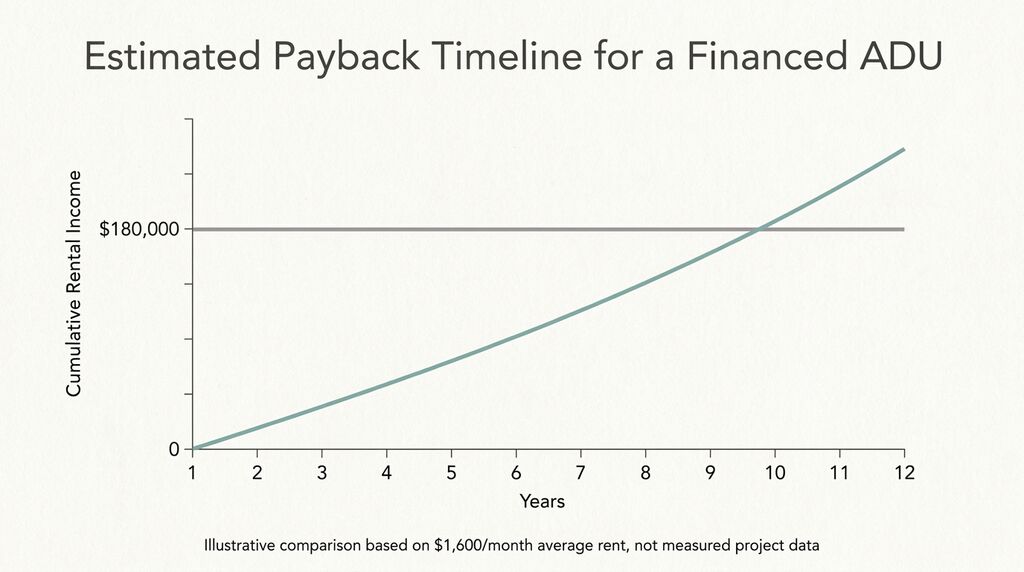
A detached ADU in Fairfax County or Arlington typically runs $150,000 to $250,000 depending on size, finishes, and site work. Garage conversions and basement ADUs cost less because the structural shell already exists.
That range matters for financing because it determines which option even covers the project. A $180,000 detached build usually needs a renovation loan or a combination of HELOC plus refinance. A $60,000 basement conversion often fits inside a HELOC alone.
Typical ADU Cost by Project Type in Northern Virginia
| ADU Type | Typical Cost Range | Best-Fit Financing |
|---|---|---|
| Basement conversion | $50,000–$90,000 | HELOC or personal loan |
| Garage conversion | $70,000–$120,000 | HELOC or renovation loan |
| Attached addition (above garage) | $120,000–$180,000 | Renovation or construction-to-permanent loan |
| Detached new-build | $150,000–$250,000+ | Construction-to-permanent or cash-out refi |
Want to see what your specific project would cost before you talk to a lender? Run the numbers with our free project cost calculator first.
Rent in Fairfax County and Arlington for a one-bedroom ADU currently runs $1,400 to $2,000 a month. At the midpoint, that’s roughly $19,000 a year, which means most well-built ADUs pay back their construction cost within 8 to 12 years, before counting any appreciation in the home’s appraised value.
Costs shown are general estimates based on national and regional averages, not a quote. Pricing varies widely by project scope, materials, labor rates, and site conditions. Use this to frame budget thinking, then get a real number from a contractor.
Is Fairfax County’s “ADU” the Same Thing You’re Trying to Build?
No, and this trips up more homeowners than anything else in the process. Fairfax County’s official “Affordable Dwelling Unit” program refers to income-restricted housing units, not the accessory dwelling unit you’re building on your own lot.
The two programs share an acronym and nothing else. Fairfax County’s ADU program governs deed-restricted, income-qualified housing built by developers as part of larger residential projects. It has its own application process, income limits, and waitlists.
The unit you’re financing, a garage apartment, a basement unit, or a detached cottage on your existing lot, falls under a completely different part of the zoning ordinance. Fairfax County’s own zoning code calls it an “Accessory Living Unit,” or ALU, not an ADU. If you call the county asking about “ADU financing,” ask for the Accessory Living Unit program specifically or you’ll get routed to the wrong department.
What Should I Look for in a Contractor Before I Apply for Financing?
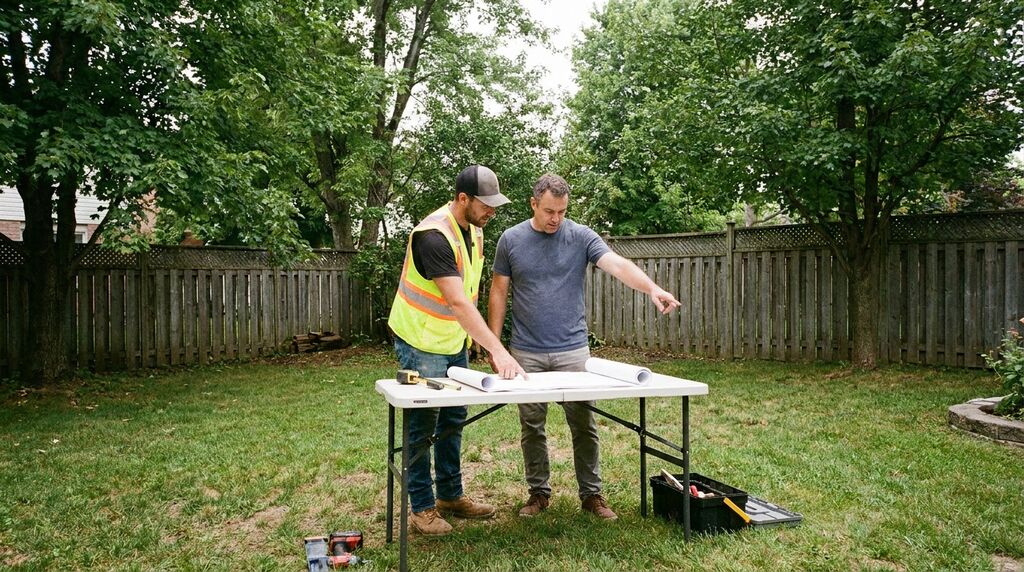
Lenders want a signed contract before they’ll close, so your contractor selection actually happens before your loan does, not after. That order surprises a lot of first-time ADU builders.
Look for a contractor who’s built detached or attached ADUs specifically, not just kitchens and additions. The permitting path for an accessory unit, especially a detached one requiring a Special Permit in Fairfax County, is its own animal.
A contractor who provides a detailed, itemized budget upfront makes your loan application faster, since that document is exactly what most lenders ask for. One who quotes a single lump number without a breakdown will slow your financing down.
Curious what a full-service ADU build actually looks like from permit to move-in? Compare it against a major home addition in our Northern Virginia addition cost guide.
We ask every ADU client the same three questions before recommending a financing path: how much equity is in the primary home, what the target budget is, and whether the unit will be rented out or used for family. Those three answers point toward a HELOC, a refinance, or a renovation loan almost every time.
How Do You Actually Move From Curious to Approved?
Getting from research to a signed loan takes five concrete steps, not months of guesswork. Confirm zoning, price the project, shop lenders, compare true costs, and lock in financing before your contractor’s pricing expires. Most Northern Virginia homeowners move through this sequence in six to ten weeks.
Step 1: Confirm Your ADU Is Allowed on Your Lot
Zoning determines everything else, since no lender will finance a project the county won’t permit. Check your specific zoning district and lot size against current ADU rules before you spend a dollar on plans. A detached build that needs a Special Permit in Fairfax County follows a very different timeline than an interior conversion approved by right.
Step 2: Get a Contractor Estimate and Preliminary Plans
A real number replaces the guesswork that stalls most ADU projects at the financing stage. Ask for an itemized budget, not a single lump sum, since that’s the document nearly every lender wants before moving your application forward.
Step 3: Talk to Your Current Lender and Two Others
Rates, terms, and rental-income rules vary enough between lenders that the extra phone calls are worth it. Ask each one directly whether they count projected ADU rental income, since that answer alone can shift which loan type makes sense for you.
Step 4: Compare Total Cost, Not Just the Monthly Payment
A lower monthly payment can still cost more over the life of the loan once a reset mortgage term or a longer amortization schedule gets factored in. Ask each lender for the total interest paid over the loan’s full term, not just the payment quoted at closing.
Step 5: Lock In Financing Before Your Contractor’s Pricing Expires
Material and labor estimates carry an expiration date, usually 30 to 60 days, after which your contractor may need to requote the job. Move from lender comparison to a signed commitment while your original estimate still holds, so rising costs don’t erase the numbers you budgeted around.
None of this requires a decision today. A conversation with a builder who’s financed ADUs across Fairfax, Arlington, and Alexandria costs you nothing and usually clarifies which path fits before you fill out a single loan application.
Frequently Asked Questions about ADU Financing
Can I get ADU financing with less than 20 percent equity in my home?
It’s harder but not impossible. A renovation loan based on after-completion value, rather than current equity, is usually your best option, since it qualifies you against what the home will be worth once the ADU is finished, not what it’s worth today.
Does building an ADU raise my property taxes in Fairfax County or Arlington?
Yes. Both counties reassess property value after a permitted addition, and a finished ADU typically increases your assessment. Factor the new tax line into your monthly budget alongside the loan payment, not just the loan payment alone.
Can I combine a HELOC with a personal loan to cover the full project?
Yes, and it’s common when a HELOC covers most of the budget but falls short of the final number. Just confirm your contractor’s payment schedule lines up with when each source of funds becomes available.
What happens to my ADU financing if I sell the house before the loan is paid off?
A HELOC or cash-out refinance gets paid off from sale proceeds at closing, same as your primary mortgage. A renovation loan that’s already converted to a permanent mortgage works the same way.
Do I need a signed contractor estimate before a lender will even talk to me?
Most lenders want one before final approval, but you can usually start the conversation with ballpark numbers. Get the signed contract in hand before you expect a closing date, since it’s standard documentation across every financing option covered here.
Why Homeowners Trust Renewal Homes With ADU Projects
We’ve walked Northern Virginia homeowners through the zoning, permitting, and financing maze on ADU projects across Fairfax, Arlington, Alexandria, and Falls Church. That’s a narrower specialty than general remodeling, and it shows in how fast our clients move from estimate to permit.
Financing an ADU is a lending decision, but building one correctly the first time is what protects that investment. A contractor who understands both sides of that equation is worth more than the interest rate you land on.
Ready to get a real number for your project? Contact Renewal Homes to talk through your ADU, your lot, and your budget.