What you need to know now about accessory dwelling units in Virginia:
- Virginia’s SB 531, signed April 2026, requires every locality to allow ADUs in single-family zones by right, effective July 1, 2027
- NoVA homeowners planning ahead should act now: design, permits, and contractor selection all take months before a shovel goes in the ground
- Building costs in Northern Virginia range from $75,000 for a basement conversion to $350,000+ for a detached new-build, depending on type and finish level
- ADUs serve multiple purposes: multigenerational living, rental income, home office, and long-term resale value
Read on to find out which ADU type works for your property, what the new law actually changes (and what it doesn’t), and how to get the project started on the right timeline.
What Is an Accessory Dwelling Unit, Exactly?
An accessory dwelling unit is a self-contained secondary residence on the same lot as your primary home. It has its own kitchen, bathroom, sleeping area, and separate entrance. That’s the legal definition under Virginia’s new law.
In practice, homeowners call them all kinds of things: in-law suites, granny flats, carriage houses, backyard cottages, or garage apartments. The structure type varies more than the name.
The Four Main ADU Types
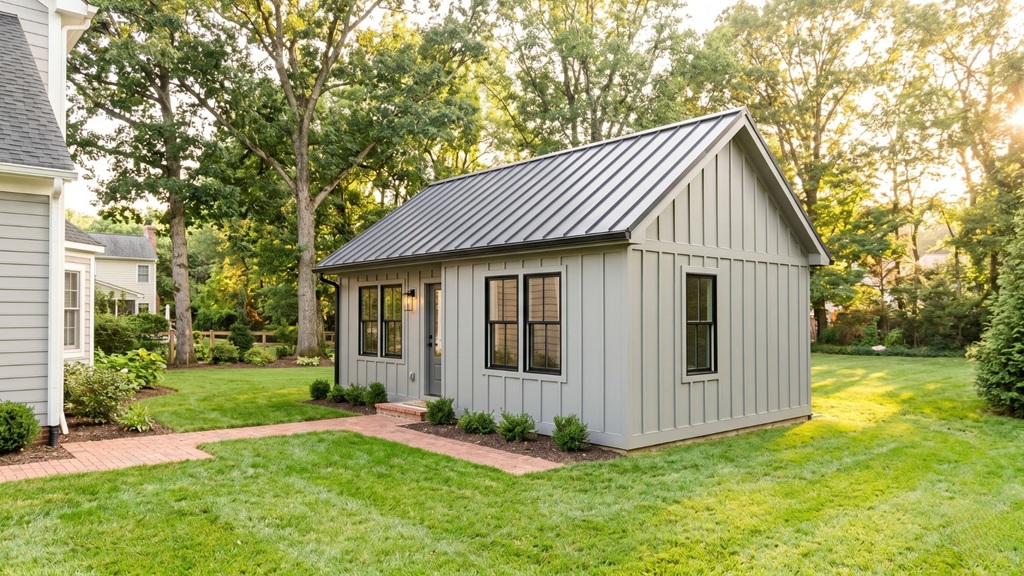
Detached ADU
A freestanding structure in the backyard or side yard, completely separate from the main house.
- Maximum privacy for both households
- Highest construction cost
- Biggest impact on property value
Attached ADU
An addition built onto the side or rear of the main home, sharing at least one wall.
- Less expensive than detached builds
- Shares mechanical systems in many cases
- Good fit for larger lots with tight setback requirements
Garage Conversion
An existing attached or detached garage converted into living space.
- Most affordable ADU path in most situations
- Slab and shell already exist
- Parking trade-off is the main constraint
Interior Conversion (Basement or Upper Floor)
An existing finished or unfinished portion of the home is separated and made into an independent unit.
- Often lowest construction cost of all ADU types
- Requires egress window work in most basements
- Less visual impact on the property exterior
Thinking about which ADU type works for your property layout? Our team has designed and built ADUs across Northern Virginia and can walk you through what’s realistic before you commit to a plan. Explore our ADU construction services →
What Does Virginia’s New ADU Law Actually Change?
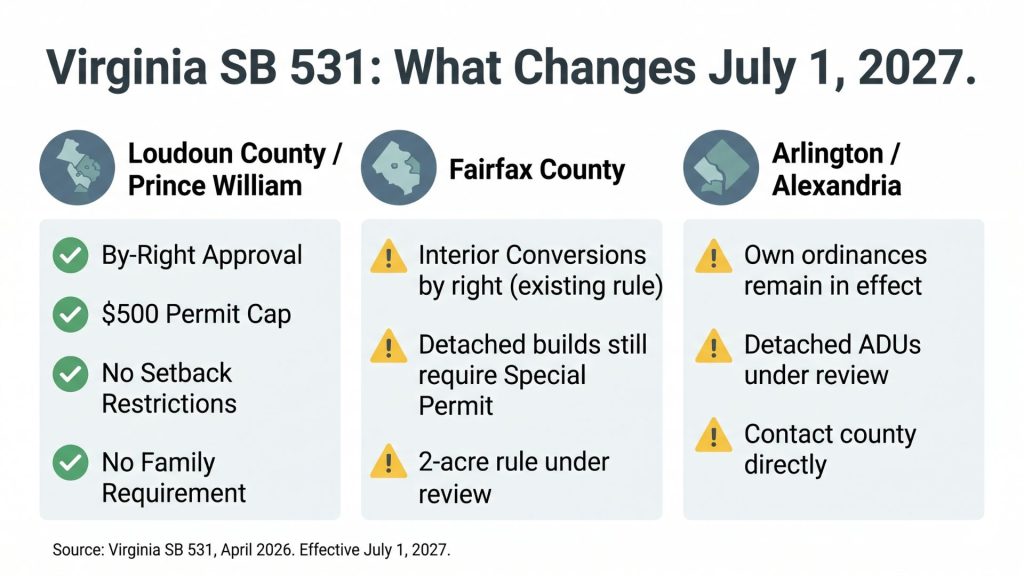
Virginia’s SB 531, signed by Governor Abigail Spanberger in April 2026, gives homeowners the legal right to build ADUs in single-family residential zones with no special use permit, no public hearing, and no neighbor objection process. The law takes effect July 1, 2027.
Before this, most of Northern Virginia made ADU construction extremely difficult.
What the Law Does
- Requires by-right approval: If your project meets local code, the permit must be approved administratively. No Board of Zoning Appeals. No public comment period.
- Caps permit fees at $500: The locality cannot charge more than $500 for the ADU permit itself (separate from building permit fees).
- Prohibits excessive setback requirements: Localities cannot impose setbacks stricter than what applies to the primary dwelling or other accessory structures.
- Removes family-relation requirements: You do not have to be related to the person living in the ADU. You can rent to anyone.
- Eliminates minimum lot size barriers: The old rules in some jurisdictions that required 2+ acres for a detached ADU go away under the new framework.
The Critical Exception for Northern Virginia
Here is where this gets complicated for NoVA homeowners specifically.
The law includes an exemption: localities that already had an ADU ordinance in place as of January 1, 2026 are not required to comply. That means Alexandria, Arlington, and Fairfax County (all of which had existing ADU ordinances) may not be automatically subject to SB 531’s requirements.
This does not mean ADUs are impossible in those jurisdictions. It means each one operates under its own rules.
- Fairfax County: Calls them Accessory Living Units (ALUs). Interior conversions are approved administratively. Detached ALUs historically required a 2-acre minimum lot, though updated county guidance post-SB 531 is still evolving.
- Arlington County: Calls them Accessory Dwellings (ADs). Interior conversions have been permitted. Detached ADUs were previously prohibited; county rules are being reviewed.
- Alexandria: Has its own ADU ordinance predating the new law. Check directly with the Alexandria Department of Planning and Zoning.
Loudoun County, Prince William County, and other jurisdictions without prior ordinances will follow the state law when it takes effect July 1, 2027.
The Bottom Line on the Exemption
If you live in Fairfax, Arlington, or Alexandria: the new state law does not automatically open every option for you on day one. Your jurisdiction’s existing rules still apply, and you need a contractor who knows the specific requirements for your county.
If you live in Loudoun, Prince William, or most other NoVA localities: the state framework applies starting July 2027, and planning should start now.
Curious how much a home addition or ADU build actually costs in Northern Virginia? We break down the real numbers by project type. Read: Home Addition Cost in Northern Virginia →
How Much Does an ADU Cost to Build in Northern Virginia?
Northern Virginia is not a typical construction market. Labor rates here run 15 to 25% above the national average, and permitting processes in Fairfax and Arlington add time and cost that most national estimates do not account for.
The NAHB’s 2024 Cost of Construction Survey puts standard residential construction at $162 per square foot nationally. In Northern Virginia, that number scales up considerably depending on project type.
Cost Ranges by ADU Type in Northern Virginia (2026)
| ADU Type | Typical Cost Range | Sq Ft Range | Key Cost Driver |
|---|---|---|---|
| Basement conversion | $75,000 – $145,000 | 400–700 sq ft | Egress windows, ceiling height, separate entrance |
| Garage conversion | $80,000 – $140,000 | 400–600 sq ft | Insulation, HVAC, slab condition |
| Attached addition | $150,000 – $250,000 | 500–800 sq ft | Foundation tie-in, roofline integration |
| Detached new-build | $200,000 – $350,000+ | 500–900 sq ft | Site work, utility connections, full shell |
What Drives Cost Up in NoVA
- Labor rates: Trades in Fairfax and Arlington run higher than most metro areas. That gap is real.
- Permitting complexity: Fairfax County’s ALU process involves a Special Permit for detached builds, adding weeks of staff review.
- Impact and connection fees: Some localities charge $2,000 to $8,000 in connection fees for a new dwelling unit. These are on top of permit costs.
- Finish level: Mid-range finishes (quartz countertops, LVP flooring, upgraded cabinets) in a detached ADU add $40,000 to $60,000 over builder-grade.
What to Expect on Cost Per Square Foot
- Economy finish: $200 to $275 per sq ft
- Mid-range finish: $275 to $375 per sq ft
- High-end finish: $375 to $500+ per sq ft
Most homeowners building for rental income target mid-range. It attracts reliable tenants and does not overcapitalize the unit.
Pricing Disclaimer
The cost ranges above are general estimates based on current Northern Virginia market conditions. They are not a quote. Actual costs vary by project scope, site conditions, existing structure, material selections, and labor availability. Get real numbers from a licensed contractor who has reviewed your specific property.
What Return Can You Expect From an ADU in Northern Virginia?
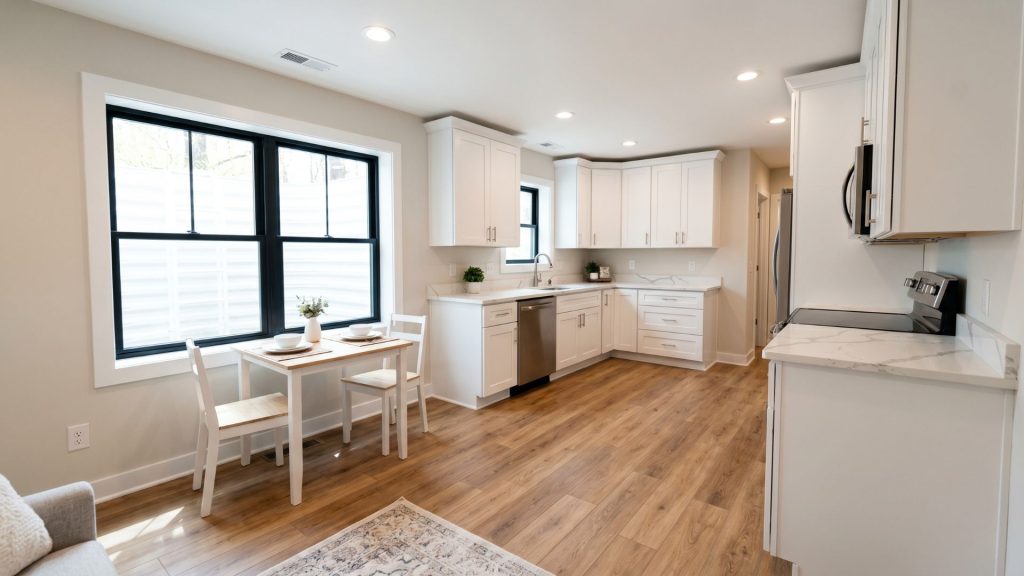
Northern Virginia has one of the tightest rental markets on the East Coast. That matters a great deal when you are sizing up whether a $150,000 to $250,000 investment makes financial sense.
A one-bedroom ADU in Fairfax County or Arlington currently rents for $1,400 to $2,000 per month, depending on condition, location, and size. In some parts of the region, numbers go higher.
Three Ways an ADU Adds Value
Rental Income
At $1,600 per month, a well-built ADU generates $19,200 per year. Over 10 years, that’s $192,000 not counting any rent increases. Most homeowners recoup the full construction cost within 8 to 12 years.
Property Value
A legal, permitted ADU adds measurable appraised value the day it’s finished. In strong Northern Virginia markets, that typically ranges from $80,000 to $175,000 in increased property value, depending on construction quality and location.
Multigenerational Flexibility
For families navigating aging parents, adult children who cannot afford the current rental market, or family members needing care, an ADU is a long-term housing solution that money cannot easily replace. Check out Multigenerational home design in Northern Virginia →
What Are the Permit Requirements for an ADU in Northern Virginia?
Every ADU in Virginia requires a building permit. That is non-negotiable regardless of county, size, or type. In addition to the primary building permit, most projects also require:
- Electrical permit: New panel circuits, outlets, lighting
- Plumbing permit: Kitchen and bathroom rough-in and finish
- HVAC permit: New or extended mechanical system
- Environmental health permit: May apply if connecting to a well/septic system rather than public utilities
Permit Timeline by Project Type
| ADU Type | Permit Timeline | Notes |
|---|---|---|
| Interior conversion (by-right) | 4–8 weeks | Administrative approval in most jurisdictions |
| Garage conversion | 4–10 weeks | Depends on locality, structural review |
| Attached addition | 6–12 weeks | Structural engineering review required |
| Detached new-build (Special Permit) | 3–6+ months | Fairfax requires BZA/ZED process for most lots |
Interior conversions in jurisdictions that allow by-right approval move fastest. Detached builds in Fairfax County have the longest timeline because of the Special Permit process.
The National Association of Home Builders identifies three consistent hurdles for ADU construction: zoning restrictions, financing access, and contractor knowledge. All three apply in NoVA, and all three are manageable with the right team.
Plan for at least three to six months from permit application to approval in most NoVA jurisdictions. If a Special Permit is required, add another two to four months for staff review and public hearing scheduling.
Want to understand the full process before committing to a scope? Our 16-step project process starts with a free discovery call and moves through feasibility, design, and fixed-cost proposal, all before a contract is signed. See how we work →
Garage Conversions: The Fastest ADU Path for Most Homeowners
For homeowners who already have a detached or attached garage, conversion is usually the fastest and most affordable route to a legal ADU.
The shell exists. The slab exists. The roof and exterior walls are already there. You are finishing the interior and adding mechanical systems rather than building from scratch.
What a Garage Conversion ADU Includes
- Insulation: Walls, ceiling, and slab (or sleeper floor system over concrete)
- HVAC: Mini-split systems are the most common solution for detached conversions
- Electrical: Subpanel or dedicated circuits from the main panel
- Plumbing: New rough-in for kitchen and bathroom; connection to existing lines
- Egress: Properly sized windows and a code-compliant exterior door
- Finishes: Flooring, cabinetry, countertops, fixtures
A garage conversion in Northern Virginia typically runs $80,000 to $140,000, depending on the slab condition, exterior matching requirements, and finish level.
The trade-off is parking. If your jurisdiction requires off-street parking and the garage is your only covered spot, a conversion may require alternative parking solutions. Check local zoning before assuming the conversion path is straightforward.
Read more about garage conversions in Northern Virginia →
How to Start Your ADU Project Without Wasting Six Months

The homeowners who get stuck longest are the ones who start by calling contractors before they know what they’re building. Here is the order that actually works.
Step 1: Confirm What Your Jurisdiction Allows
Before anything else, confirm with your county or city what type of ADU is permitted on your specific lot. This is not something you can assume based on a neighbor’s project.
Fairfax County: Contact the Department of Planning and Development (zoning intake)
Arlington County: Contact the Department of Community Planning, Housing and Development
Loudoun County: Contact the Department of Building and Development
Step 2: Get a Site Review
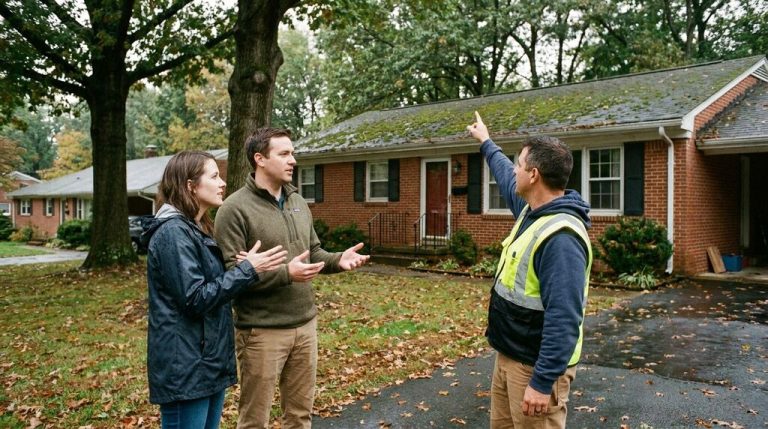
A licensed contractor or architect can review your property and tell you what’s feasible based on lot size, setbacks, existing structure condition, and utility access. This step catches problems early, before you’ve spent money on design or permits.
Step 3: Align on Budget Before Design
One of the most common project failures: homeowners design their ADU first, then discover the budget doesn’t match. A feasibility and budget alignment conversation upfront saves months of back-and-forth.
Step 4: Permit First, Build Second
Never start construction before permits are issued. Unpermitted ADUs are a liability on your property title, cannot be legally rented, and must be removed or retroactively permitted at significant expense.
Step 5: Work With a Contractor Who Knows the Jurisdictional Rules
NoVA has multiple overlapping jurisdictions, each with different terminology, forms, and review processes. A contractor who has pulled permits in Fairfax County, Arlington, and Loudoun knows what reviewers look for and where projects get held up.
Frequently Asked Questions about Accessory Dwelling Unit Virginia
What is the difference between an ADU and a home addition in Northern Virginia?
A home addition adds square footage to your primary residence and is part of the same dwelling unit. An ADU is a separate, self-contained living space with its own kitchen, bathroom, and entrance on the same lot. Additions do not create an independent dwelling; ADUs do. Both require permits, but they go through different review processes and are governed by different zoning rules.
Does Virginia’s new ADU law apply to Fairfax County?
The exemption in SB 531 allows localities that had ADU ordinances before January 1, 2026 to maintain their own rules. Fairfax County had an existing ALU ordinance, so the county is not automatically required to adopt the state framework. Interior ALU conversions remain administratively approved. Detached ALUs on most Fairfax lots still require a Special Permit through the Zoning Evaluation Division. Check with the county directly or consult a licensed contractor for your specific parcel.
Can I rent my ADU to non-family members in Virginia?
Under SB 531, yes, effective July 2027 for jurisdictions subject to the new law. There is no longer a family-relation requirement between the primary dwelling occupant and the ADU tenant. Fairfax, Arlington, and Alexandria operate under their own ordinances, so check the specific rules for your county. Virginia law also allows localities to impose a minimum 30-day rental period for ADUs.
How long does it take to build an ADU in Northern Virginia?
From initial design through construction completion, plan for 9 to 18 months total. Permitting alone takes 4 to 12 weeks for interior conversions and 3 to 6+ months for detached builds requiring a Special Permit. Construction typically runs 3 to 6 months depending on scope. Starting the process now, well before the July 2027 statewide deadline, puts you ahead of the permitting backlog that will likely follow the new law’s effective date.
Does an ADU increase my property taxes in Virginia?
Adding a permitted ADU increases the assessed value of your property, which can result in a higher real estate tax bill. In Fairfax County, additions and new structures are assessed after the permit is closed. The value added by a well-built ADU typically exceeds the incremental tax increase many times over when rental income and resale value are considered together.
What is the maximum size for an ADU in Fairfax County?
Fairfax County caps Accessory Living Units at 800 square feet or 40% of the primary dwelling’s floor area, whichever is smaller. Size limits vary by jurisdiction. Arlington and Loudoun have their own maximums, and the state law framework also places limits on ADU square footage relative to the primary home. Confirm size limits with your jurisdiction before committing to a floor plan.
Build an ADU With a Team That Knows Northern Virginia
Adding an ADU is one of the highest-return investments a homeowner in this market can make. The demand for independent living space, rental income, and multigenerational housing is not going away. The new state law makes the path clearer than it has ever been.
But the project only delivers those returns if it is planned correctly, permitted properly, and built to last.
Renewal Homes DMV is a licensed Class A general contractor serving Northern Virginia. We have worked through Fairfax County’s ALU process, Arlington’s AD framework, and the full range of interior and addition-based ADU builds across the region.
If you are serious about building an ADU, the right first step is a conversation, not a quote. We start with a discovery call, walk your property, and give you an honest feasibility assessment before asking you to commit to anything.
Schedule your free ADU consultation with Renewal Homes DMV →